Friday, January 2, 2015

DO Ndop Speaks out on; Why Bamali Openly Demonstrated & Brutally Retaliated to Gov’t Actions

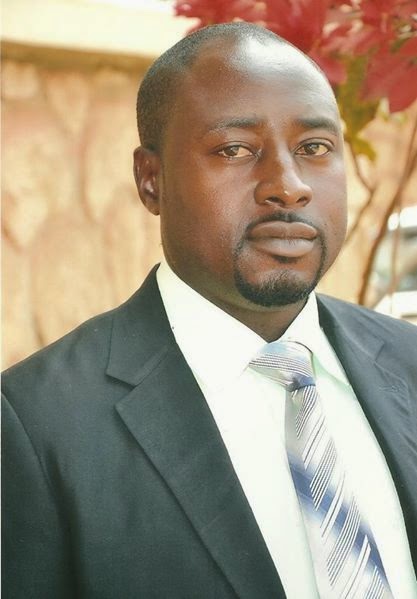
HRH. D.O Poss Alex Francois speaking to this reporter on the 30th of December 2014 inside heavily armed soldiers on the bridge separating Bamali and Bamunka villages 500m from the Bamali square’s along the express highways of the ring road blocked on either ways obstructing free circulation of vehicles and passengers, 20 minute after the SDO for Ngoketunjia Division Kuela Valeri Norbert was attacked by the angry mob in an attempt to broker for peace, in anger declared “Administration ordered troops coming from Bamukumbit and Baligansing to reinstate peace, into Bamali and most especially the Palace to dislodge the plot a hand full of villagers were hashing or cooking up to attack Bamunka a neighboring village as reliably informed by an authoritative source”.
“To our surprise, a move that was well intended to secure the peace that should reign supreme in our Division was later misinterpreted by misguided individuals who thought we were coming for the arrest of their Fon who is not recognized by us since he does not posses all the legal document authorizing him to rule over a people from government”.
“Where we are before the attack of the SDO, we have been subjected to several attacks from the Palace right up to where we are and very determined to send away the angry mob from the express high way without any casualties or incident. That is why I instructed my elements to only fire in the air and not in the crowd to disperse the rioters. Which is why no major incident has been recorded except for our SDO’s situation and some five elements who were accidentally caught by stray stones flung at us who are
HRH.DO Poss Alex Francois

Fon Chenefou II of Bamali Village Choice of the gods and of the People
undergoing medical attention. I regret all what is happening and know the people are acting out of sensation because they are trying to interpret government actions wrongly. We succeeded in collecting five rifles from the Palace and some three others in the village”. So where did the Administration go wrong!
The Fon Chenefou II on his part on the phone in a follow up question by this Reporter on what was happening in his village said, “Seating in their traditional council deliberation meeting, a group of soldiers and the Administration attacked and brutalized the Palace with some of the armed men even slapping me for nothing. Alarm was then send round the village which brought villagers agitating on account that their Fon was attacked for no just reason and that they were not hashing any plot to attack Bamunka a village with whom they have cordial links except for the fact that their Fon do not want to recognize the Fon on the thrown”.
Hear them, “we have no problem with the Palace administration because they have been governing us for well over six years without any problem, why should administration keep hashing motives to provoke chaos in our village? What we want the government  and by extension the Head of State whom we are strongly behind to know is that we the people of Bamali will remain peaceful and law abiding provided they leave us the way we are”.
Cueing up from two authoritative voices in the constituency their reactions expressed remorse for what happened as they prĂ©cised that “why has the Administration not also open the search for guns in the keeping of the notorious Balikumbat village known reputed for attacking neighboring villages? Were they having a search warrant? Why should that exercise be conducted during a delicate hour? Yes we admit the move was for security, are there any palpable proves that the people were planning to go to war? I know no such problem existing between two villages rather, what I know is that the people of Bamali have remained loyal and law abiding to the governing regime and are strongly behind the Head of State President Paul Biya. “It is really a pity and embarrassing that administration has been unable to read the hand writing clearly on the walls that the situation remains as it is and only natural circumstance will seek amends to the wishes of the Administration”.
From the above, in a divided view resume, villagers, authorities and Administrators expressed their opinions on the matter as the durst of uncertainty that almost destabilized public peace settle.
As SDO recovers quickly while the people of Bamali pick up particles of the minor casualties incurred in the course of the chaotic situation and routine or business activities goes back to normal, calm regains its place in the jurisdiction of DO Poss Alex Francis

Biya Launches Fierce War Against Boko Harram:Details in Head of State’s New Year message to the Cameroonians


Fellow Cameroonians,
My dear compatriots,
It was our hope, following a period of intensive political activity, that as 2014 was not an election year, we would be free to devote ourselves primarily to reviving our economic growth which, as you are aware, is a prerequisite for improving the living conditions of our populations.
Such was not exactly the case owing to the escalation of attacks against our national territory by the Boko Haram sect. Besides this, there were the criminal activities of armed gangs on our border with the Central African Republic.
Initially, the Boko Haram terrorist organization carried out raids to seize isolated hostages or loot public or private property.
Buoyed by their grip on north-eastern Nigeria, the so-called “jihadists” launched major attacks on the Far-North Region of our country, for instance, the attack on the workers’ camp of a Chinese company at Waza and the raid on Kolofata, resulting in several deaths and the abduction of many hostages.
This could not be tolerated. We therefore set up a response and prevention mechanism which quickly proved its worth. Since then, Boko Haram has suffered heavy human and material losses in each of its attacks. It is hoped that they would learn their lesson.
At this juncture, I would like to pay glowing tribute to our defence forces whose valour has been demonstrated in recent fighting.
I have had occasion to say that the Nation as a whole ought to mobilize and rally behind its defence forces.
Such seems to be the case by all accounts from our regions. I have most particularly appreciated the stance of our Muslim compatriots. They, like all the other Cameroonians, have clearly understood that this war is by no means based on religion. They have clearly understood that it is a response to external aggression by a terrorist organization that does not subscribe to the values of a fraternal society.
My dear compatriots,
The growing threats on our borders have prompted us to take measures to safeguard against their effects on our internal security. Such is the purport of the law on the suppression of terrorism which Parliament recently passed by a large majority. It is far from serving as a pretext for restricting civil liberties, as claimed by some ill-intentioned people. Besides, the instrument is very clear on this point.
Furthermore, faced with an upsurge in terrorist activities, most leading democratic countries have in recent years passed new laws to prevent terrorism. By so doing, they have complied with the recommendations of international organizations, particularly the United Nations and the African Union. Such is what we deemed appropriate to do. Therefore, our objective is to safeguard against any terrorist-related risk as far as possible. Every State not only has the right, but also the duty to protect its citizens. I am convinced that the vast majority of our compatriots do understand.
I would also like to recall here that Cameroon is not the only country facing this threat which knows no boundaries. Some of our neighbouring countries, namely Benin, Chad, Niger and Nigeria, are collaborating with us to form a united front against Boko Haram.
The United Nations Organization and several big powers, particularly the United States of America, Germany, France, Russia and China, also back us. I will be revisiting this issue before long.
It goes without saying that mobilizing the required resources for our defence means additional spending. As you are aware, the situation in the Central African Republic also warrants our vigilance on our eastern border. We are forced to host tens of thousands of refugees from this brotherly country. I take this opportunity to commend the valuable assistance we are receiving from humanitarian organizations. It is clear that our duty-bound solidarity has an impact on the budget. But, we must also understand that security has a price.
My dear compatriots,
As I said at the onset, we were obliged to prioritize the defence of the national territory, for, there can be no peace without security and no development without peace. Nonetheless, we have not relented in our efforts to revive growth. Now that our democratic institutions are fully functional, growth is the focus of our policy. As I stated earlier on, our growth is a prerequisite for a strong economy and, hence, our capacity to roll back poverty and progress towards emergence.
A quick evaluation of our economic programme shows that our first-generation major projects are either completed, nearing completion, or on track. Such is the case, in particular, for the Kribi Gas-fired Plant and Port, dams and hydroelectric power plants, as well as some road and various infrastructure projects.
Thanks to these projects, there is renewed activity in various sectors of our economy. The impact on employment and the improvement of living conditions is also visible. The year 2015 should therefore be characterized by the launching of second-generation projects in the energy, water, road and highway and transport sectors.
My dear compatriots,
Most of the major undertakings announced in my address on 31 December 2013 have been fulfilled.
1.We celebrated the FIFTIETH ANNIVERSARY OF CAMEROON’S REUNIFICATION last February in Buea with all the necessary pomp and solemnity. The town of Buea, which has been provided with various infrastructure, has been completely transformed. The impact of this celebration was also felt in neighbouring towns. This key moment of national unity is a milestone in our history.
2.I also promised substantial improvements in the health domain. These are now realities. Malaria treatment for children aged below five is now free. Our health map now comprises three new referral hospitals: the Yaounde National Emergency Centre, the Douala Gynaecology, Obstetrics and Paediatric Hospital and the Sangmelima Referral Hospital.
3.The employment spin-offs of our growth policy which I referred to a while ago have been confirmed. In 2014, 283 443 new jobs were created against 250 000 projected, as you would recall.
4.You would also recall that I underscored the need for Cameroon to have a viable emergency plan for the coming years. This announcement as well has been translated into reality. The said plan was adopted and launched during the Council of Ministers meeting held on 9 December. I will come back to this later.
My dear compatriots, 
Should we be content with these results which can objectively be considered positive? Substantial progress has been achieved as confirmed by the recent triennial appraisal report on the implementation of the Growth and Employment Strategy Paper. That being the case, I will simply say that we can and should do even better. I am convinced, as I pointed out last year under the same circumstances, that we must increase our growth rate at all costs. Are we sure we have done all we can? 
Take the case of investment for instance, which has so far been largely initiated by the State and reserved especially for anchor and social projects. Public Investment Budget allocations have increased considerably in recent years. In 2014, they represented about one-third of the overall budget, or approximately CFAF 1 000 (one thousand) billion. This is commendable. However, in terms of execution, there are hurdles and project implementation is often slowed down. I decried such under-utilization of budgetary appropriations. As you know, our needs are obvious and urgent. I am pleased to note that this year, there has been a marked improvement in contract execution rates which should increasingly match commitment rates.
Although in 2013 the public authorities, through Parliament, adopted major incentives for private investment, the latter still seems unable to take over from the State. 
However, there seems to be progress in this direction among local and foreign entrepreneurs thanks largely to awareness-raising campaigns by investment promotion bodies. This is proven by the recent signing of 13 agreements in the Ministry of Industry, worth CFAF 180 billion. 
I want to believe this is just the beginning. We do need an ambitious industrial policy. There can be no great country without industry. Even agriculture, which I love to say is the principal source of our wealth, is also expected to go “industrial”. 
It is understandable that the implementation of our major iron and bauxite mining projects, whose ultimate goal also is industrialization, is dragging as such projects are complex. Conversely, there is no plausible reason for our slowness in developing industries to process our agricultural commodities. 
Besides the benefits we could derive in terms of value added and employment, local processing will contribute towards rebalancing our foreign trade which is showing a structural deficit. 
In fact, our trade balance is characterized by a significant import surplus against exports which largely depend on the sale of three or four commodities whose prices are unstable. Our imports, for their part, mostly concern manufactured products, notably capital goods for our major projects. Obviously, it is difficult for us to restrict our purchase of capital goods. That, we understand. On the other hand, we should be able to limit the importation of the commodities we are able to produce. 
These remarks which I am compelled to make once more reflect the difficulty we are facing moving from a State-dominated economy to a more liberal system which is now the rule. The situation is such that sometimes we suffer the disadvantages of both systems. This, to me, explains the resistance to structural reforms which is stifling our growth revival efforts.
Some of these reforms concern our governance, particularly public finance. Significant progress has been made in this area and needs to be consolidated by ensuring budget sustainability, reducing subsidies as much as possible and reviewing the tax base. On the whole, our administration would stand to benefit by streamlining its procedures and, as I said recently and instructed, cutting down on its spending. 
My dear compatriots,
To jumpstart our growth, I have instructed the Government to implement a three-year “emergency plan”. Its objective is to achieve visible progress and measurable improvements in vital areas such as urban development, health, agriculture, roads, energy, low-cost housing and security. I expect the said plan to meet the most urgent needs of our populations nationwide.
This initiative is different from our Growth and Employment Strategy which will continue to be implemented by the Government. About CFAF 1 000 (one thousand) billion will be allocated to the plan. The implementation of this plan will determine whether we are capable of meeting the challenge whose outline and timeframe we have ourselves defined.
Of course, it is crucial for our country to meet this challenge. We have the wherewithal. 
My dear compatriots,
In a few hours, you will be happily celebrating New Year’s Day.
However, before that, let us spare a thought for our soldiers who have fallen defending our Fatherland. Let us spare a thought for those securing our borders, their grieving or anxious families and our compatriots who are suffering physical and psychological pain.
I would now like to extend to you all my best wishes for good health and happiness in the New Year.
Happy and prosperous New Year 2015!


Monday, December 29, 2014

Dynamic Actions for Female Rights Emancipation in Cameroon: ‘‘Gender Equality and Women’s Right’s In Cameroon Cannot Solely Exist on Paper’’ Elvis Tamukong Female Legal Rights Advocate

Over recent years, the Cameroonian government has demonstrated a commitment to improving women’s rights across the country. Cameroon is party to the major international treaties and forums concerning women’s rights, including the Convention on the Elimination of All Forms of Discrimination against Women (CEDAW) and the Beijing Declaration Platform for Action. As such, it constitutionally recognizes gender equality and has actively encouraged women’s political participation at a national level. The Cameroonian government supports women’s initiatives, originating both from the Ministry of Women’s Affairs as well as from gender-related non-governmental organizations (NGO’s). Barriers to female education have been lifted and, to a certain extent, overcome: all Cameroonians have access to primary school education while secondary school is heavily subsidized, allowing for more girls to attend school. Gender equality has been integrated into higher education as well, evidenced by the fact that many Cameroonian universities offer courses and degrees in women’s studies.
Unfortunately, social, economic, and political inequality is still a reality for many women across the nation, especially in the rural areas. Women routinely face the oppression of traditionally-prescribed social roles in which they are confined to domestic, farm, and retail work while being simultaneously denied a voice in their families, societies, and local government. There is an overwhelming prejudice on behalf of men—and even women—that females are not competent to assume leadership roles in the community.
While the number of women working in the public, private, and military sectors has increased substantially over the last thirty years, women still face several career-related problems. There are several fields—law, medicine, business—in which women are seen as incompetent to participate. Even in these fields, women are often shut out of top-level decision-making positions and instead relegated to jobs such as administrative assistants, communications officers, and secretaries. Women are also prone to sexual harassment under a “sex-for-promotion” policy that still exists in public and private service.
Domestic violence and sexual abuse are still too prevalent in Cameroonian society. Not only are these incidents grossly underreported, but furthermore, when women do speak out against abuses they’ve suffered, the authorities often take their statements and then tell them to return to their husbands and attempt reconciliation in the same violent atmosphere. The courts also tend to be prejudiced against women who succeed in bringing domestic violence cases to
Cameroon’s laws remain deeply discriminatory towards women and, despite observations and recommendations made by the CEDAW Committee to the Cameroon government in 2000 and 2009, no legal reforms have been undertaken to increase protection of women’s human rights. Furthermore, customary law is applied alongside statutory law, creating numerous contradictions and inconsistencies.
Penal Code
– Adultery is systematically punishable if committed by a woman, but is only punish- able when committed by a man if it is “habitual” or takes place in the matrimonial home (art. 361).
– Abortion is criminalized, except if the mother’s life is in danger or if pregnancy is the result of rape (arts. 337 and 339).
– Rape is criminalized, unless it takes place within marriage (art. 296).
Civil Code
– The minimum age for marriage is 15 years for girls and 18 years for boys (art. 52). Girls under 18 are not required to consent to marriage, parental consent is sufficient (art. 49).
– The man can choose which matrimonial regime applies (monogamy or polygamy). If no choice is made, the couple is married under common law, which allows polygamy and community of marital property. The payment of dowries is authorized (art. 70).
– The husband is considered to be the head of the family (art. 213). He also has the sole right to determine the family domicile (arts. 108 and 215) and, in the interest of the household and the children, may prevent his
Tamukong Elvis Female Legal Right's Advocate
wife from taking employment (Regulation 81-02, implementing the Civil Code).
– Women are not entitled to full use and enjoyment of property (arts. 1421 and 1428). The husband has the right to administer communal marital property, thereby giving him the right to sell or mortgage the couple’s property without his wife’s consent. These provisions are contrary to the Constitution.
These issues do not just disenfranchise women, strip them of their human rights, and jeopardize their well-being; they also put society at risk. When one-half of a population is being oppressed and unfairly treated, the society as a whole will suffer from retardation in political, economic, and social growth. Yet, the challenges in achieving gender equality are multi-faceted and complex. Social attitudes, traditions, and norms must be changed before women can achieve full equality with men. Yet, the government, civil society organizations, and individual citizens must come together to do their part by educating the public on proper gender relations. Women, especially in the villages, must have the systemic and social mobility to take political and economic leadership positions. Education equality must be rigorously continued. Laws concerning gender equality and women’s rights cannot exist solely on paper; the government must ferociously implement the standards and legal provisions it has signed and enacted.

Saturday, December 27, 2014

Free Scholarship in Micro Finance studies at Optimistic Business School


The Gate way to Success
                       Authorisation Number: 336/MINEFOP/SG/DFOP/SDGSF/CSACD
Congress Hall Street, Opposite Camtel Building, Commercial Avenue, Bamenda,
                                                                Cameroon.
Offers Scholarship in the following courses: 
1.      Accountancy
2.      Human Resources Management
3.      Business Management
4.      Microfinance
5.      Marketing
6.      Banking and Finance
7.      Secretariat Studies
8.      Extraction of Ore (Mining).
     For more information, visit the school campus or you call this numbers:
                    +(237) 661 88 80 77, 679 36 27 48, 693 47 44 31.
    JOB OPPORTUNITY
 Marketers and Executive Secretary needed. For more information call +(237) 661 88 80 77, 679 36 27 48, 693 47 44 31.